Box of Dreams Tree Coloring Pages Graphics
First Impression: Whimsical, Hand-Drawn Warmth with Local Brand Potential
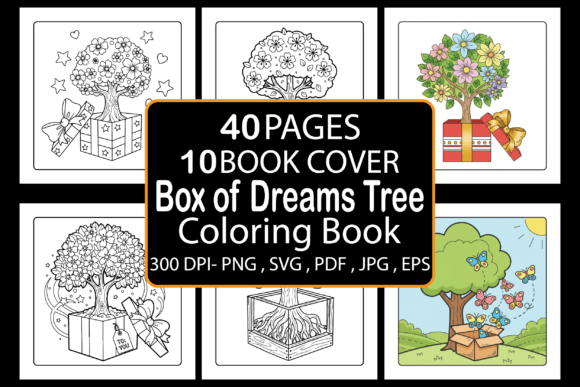
Opening the Box of Dreams Tree Coloring Book, I immediately notice its delicate linework, organic asymmetry, and gentle negative space—this isn’t mass-produced clipart. It reads as intentionally handmade: soft curves, subtle texture hints, and a quiet confidence in its imperfections. For a local business—say, a lavender-scented candle studio in Asheville or a small-batch maple syrup brand in Vermont—this graphic design asset evokes warmth, authenticity, and quiet celebration. It suggests a brand personality that’s thoughtful, nature-rooted, and gently feminine—not overly sweet, not aggressively rustic, but quietly confident in its craft. It leans elegant over playful, serene over bold—ideal for businesses where calm intentionality is part of the value proposition.
Where This Coloring Book Fits Real Local Business Branding
I recently used pages from the Box of Dreams Tree Coloring Book to develop packaging for a Portland-based herbal tea boutique launching a limited “Forest Dreamer” seasonal blend. We didn’t just slap a tree on a label—we adapted two line-drawn trees into a repeating border for kraft tea boxes, used a simplified version as a watermark behind hand-lettered product names on thank-you cards, and extracted one intricate canopy as a hero graphic for Instagram Stories and website banners. That flexibility is rare. As a digital printable, it’s built for real-world adaptation: scalable vector-ready lines (check your SVG export), clean PNG transparency for layered mockups, and consistent stroke weight across all 40 designs—critical for professional branding.
Practical Applications Across Touchpoints
- Packaging design: Use as a subtle background repeat on labels, a focal accent on front-of-box hang tags, or a decorative frame around ingredient lists on artisanal food products.
- Social media graphics: Layer over muted brand-color gradients for cohesive Reels thumbnails or Stories highlights—especially effective for seasonal campaigns (spring launches, holiday gifting).
- Printable inserts: Print single pages as branded bookmarks for bookshops, or as illustrated “thank you” inserts inside soap or candle orders.
- Product mockup enhancement: Place a high-res tree outline over a flat-lay photo of ceramic mugs or linen napkins to elevate visual storytelling without custom illustration costs.
- Local event visuals: Scale one design to poster size for farmers’ market signage—or simplify it into a stencil for window painting at your boutique.
Why It Strengthens Small Business Presentation
When your honey jar sits beside five others at a local co-op, visual distinction matters. The Box of Dreams Tree Coloring Book helps build stronger first impressions—not through loudness, but through intentional quietude. Its consistent line quality supports clearer visual hierarchy on crowded packaging. When paired with a strong serif font for your brand name and a soft sans serif for descriptors, it creates rhythm and breathing room. That consistency across labels, stickers, and social posts reinforces brand identity without repetition fatigue. Customers subconsciously register reliability—and that builds trust. For handmade businesses especially, this kind of cohesive, non-generic decoration signals care in every detail, elevating perceived value and shelf appeal far beyond what stock vectors achieve.
Best Fit: Where These Graphics Shine
This asset excels in contexts where subtlety and atmosphere matter more than literal messaging: product labels for botanical skincare, decorative borders on café menu boards, embossed accents on boutique gift wrap, hero graphics for Etsy shop banners, or layered textures in Canva templates for local event flyers. It works beautifully in seasonal packaging—think gold-foiled trees on winter candle boxes or watercolor-washed versions for spring soaps. For florists or home decor shops, it adds narrative depth without competing with photography. And because it’s designed as coloring pages, it invites interaction—perfect for printable marketing visuals that double as customer engagement tools (e.g., “Color our dream tree & tag us!”).
Cautions: Where to Use Thoughtfully
Don’t force it where clarity is non-negotiable. Avoid dense ingredient panels, tiny QR code labels, or legal disclaimers—fine linework disappears at under 8pt. Steer clear if your brand voice is ultra-minimalist (think luxury skincare with stark white space) or highly technical (e.g., lab-tested supplement brands). It also risks visual competition when placed beside heavy script fonts or busy photographic backgrounds—always test contrast and scale. And never assume compatibility: verify commercial licensing explicitly before using in client work, physical product sales, or Amazon KDP interiors—even if sourced from a creative marketplace.
Brand Designer Notes: Before You Commit
Always test the Box of Dreams Tree Coloring Book in context: print a label mockup at actual size; preview in black-and-white to assess line integrity; layer it over your brand’s top three colors to confirm harmony; compare side-by-side with competitor packaging on a shelf mockup. Check whether the files include editable SVG paths (not just PNGs)—essential for resizing without pixelation. Test how the trees sit beside your chosen typefaces: they pair best with gentle serifs (Cormorant Garamond), warm sans serifs (Poppins Light), or restrained scripts (Bellefair), but can clash with geometric displays or tight monospaced fonts. Finally, confirm the license covers commercial design use—not just personal projects—especially for POD products, book covers, or client deliverables. This is a digital product built for real business impact—but only when applied with intention.