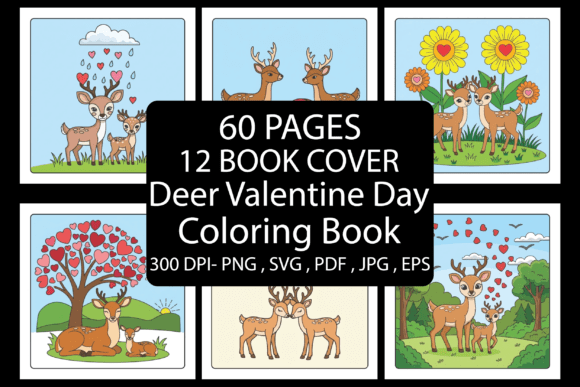
Deer Valentine Day Coloring Book
A Designer’s First Glance: Whimsy, Warmth, and Quiet Charm
Opening Deer Valentine Day Coloring Book, I didn’t see 60 standalone pages—I saw 60 potential embroidery moments. As someone who’s stitched deer motifs on baby onesies, embroidered “love” into linen tea towels, and built entire holiday collections around subtle nature themes, my first impression was immediate: this isn’t loud or cartoonish. It’s tender. The lines are clean but not rigid—fluid enough for hand-drawn authenticity, precise enough to translate well into stitch. There’s a gentle balance between silhouette and detail: antlers have graceful branching, hearts nestle naturally in ears or hooves, and many designs include soft floral accents or minimalist backgrounds that breathe. It feels like something you’d embroider for a friend’s nursery—not mass-produced, but quietly intentional.
Real Project Test: A Custom Embroidered Tote for a Local Boutique
Last week, I prepped a small batch of cotton canvas totes for a downtown gift shop launching their Valentine’s pop-up. I chose one of the mid-size deer designs from Deer Valentine Day Coloring Book—a side-profile doe with a heart-shaped nose and delicate leafy garland curling behind her neck. Why this one? Because it held up at 3.5 inches wide *and* retained character when scaled down. In stitching, the curves stayed smooth, the negative space gave breathing room for fill stitches, and the heart motif read clearly without needing satin-stitch outlining. Customers loved the handmade warmth—and crucially, they didn’t mistake it for clipart. That distinction matters: Deer Valentine Day Coloring Book lands in that sweet spot where coloring-page simplicity meets design intentionality.
Where It Shines (and Where It Needs Care)
This collection works beautifully for:
- Embroidered patches — Clean outlines and moderate detail mean crisp edges even at 2–3 inches; ideal for iron-on or sew-on appliqué projects.
- Sweatshirt and tote bag design — Larger deer motifs hold presence without overwhelming fabric texture; the open-line style avoids dense stitch buildup that can stiffen heavyweight knits.
- Baby embroidery — No sharp angles or tiny disconnected elements; perfect for onesies and burp cloths where safety and softness are non-negotiable.
- Holiday gifts and boutique branding — The romantic-but-not-cloying tone fits well with curated, slow-living aesthetics—think linen pillow covers, kitchen towels, or personalized mugs (via printable mockups).
Use with thoughtful attention on:
- Small hoop sizes — Some of the more detailed deer-with-floral-border pages may require trimming or simplification before fitting comfortably in a 4x4 hoop.
- Textured or stretchy fabrics — Delicate linework can blur on terry cloth or jersey unless stabilized properly; always pair with medium-weight cutaway stabilizer for sweatshirts or baby knits.
- Dark or heavily patterned backgrounds — Since these are line-art graphics (not filled), contrast matters. Test thread colors on black fabric first—soft blush or cream may disappear; charcoal gray or deep burgundy often reads better.
- Curved surfaces like caps — Stick to simpler, bolder deer silhouettes here; avoid designs with fine interior detailing (like tiny flower centers) that won’t register after doming.
Design Integrity in the Finished Product
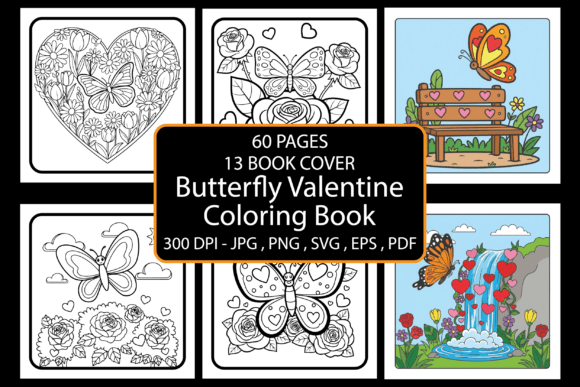
What sets Deer Valentine Day Coloring Book apart isn’t just quantity—it’s consistency of voice. All 60 designs share the same visual grammar: balanced weight, intentional spacing, and a quiet emotional resonance. That cohesion builds trust. When a customer sees your Etsy listing featuring three different deer motifs from this set—on a tea towel, an apron, and a baby blanket—they sense a unified brand story, not a grab-bag of assets. That perception lifts perceived value. It also makes cross-product marketing easier: bundle them as a “Valentine Nature Collection” and customers instantly understand the theme.
For craft business owners, this matters beyond aesthetics. Clear, legible line art translates reliably into digital embroidery files, printable mockups, and even simple applique templates. You’re not fighting unpredictable vector conversions or pixelated edges. And because the designs lean into charm over complexity, they’re forgiving for newer machine operators—fewer jump stitches, less risk of thread breaks during dense fills.
Practical Notes Every Embroidery Designer Should Run Through
Before committing to a full production run:
- Test on scrap fabric first — Especially if using textured weaves or blends. Watch how line weight holds up after stitching.
- Review stitch density in your embroidery software — Some coloring-book-style outlines convert to lighter running stitches; others may default to heavier satin borders. Adjust based on your fabric and desired effect.
- Confirm hoop size compatibility — Not all 60 designs will fit your smallest hoop without scaling or editing.
- Inspect small details at actual stitch size — Tiny hearts, antler tips, or leaf veins may vanish if scaled below 2 inches—zoom in on your embroidery preview.
- Try black-and-white mockups — These designs rely on shape and rhythm, not color. If it reads well in grayscale, it’ll translate cleanly across thread palettes.
- Check licensing terms carefully — Since Deer Valentine Day Coloring Book is positioned for KDP, POD, and commercial use, verify whether finished embroidered products (e.g., tote bags, apparel) fall under permitted usage—or if only digital resale is allowed.
In short: Deer Valentine Day Coloring Book is a quietly capable toolkit—not flashy, but deeply usable. It doesn’t shout. It invites. And for embroidery designers building meaningful, market-ready handmade products, that kind of grounded, versatile design is rare—and worth holding onto.