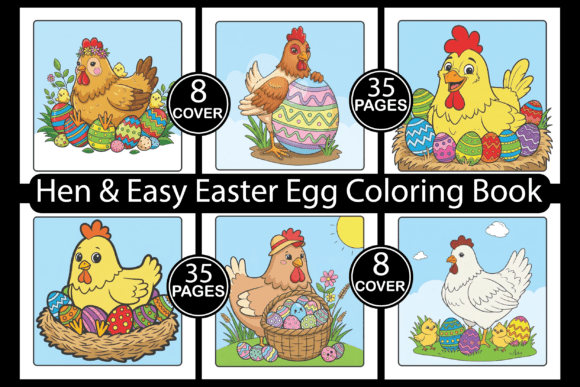
Hen Easy Easter Egg Coloring Book
A Designer’s First Glance: Charm Without Clutter
Opening Hen Easy Easter Egg Coloring Book, I didn’t see “35 pages”—I saw 35 small, confident moments of springtime storytelling. As an embroidery designer who’s stitched everything from delicate baby onesies to bold boutique tote bags, my first question is always: Does this translate? And yes—this collection feels instantly adaptable. The hens are rounded, friendly, and grounded; the eggs are softly contoured with gentle line weight—not too thin to vanish in stitching, not so thick they’ll bleed on lightweight cotton. There’s no frantic detail or overwrought shading. Just clean outlines, intentional negative space, and a quiet sense of playfulness that reads well at 3”–4” hoop sizes.
What It Actually Embroiders Well—And Where It Shines
I recently tested one of the simpler egg-and-hen motifs on a natural linen tea towel for a local gift shop launch. Used as a single embroidered motif near the corner (not centered, not oversized), it held up beautifully: crisp satin stitch edges on the hen’s body, open fill stitch for the egg’s interior, and just enough running stitch for grassy texture underneath. No puckering. No thread breakage. That’s the real win—it’s designed *for* translation, not just coloring.
This makes Hen Easy Easter Egg Coloring Book especially strong for:
- Small-batch custom apparel: Think crewneck sweatshirts for a preschool Easter fair—embroidered on the left chest with soft pastel threads.
- Personalized baby items: A single hen-egg motif on a cotton burp cloth or muslin swaddle adds warmth without overwhelming the fabric.
- Embroidered patches: Clean lines mean sharp cut edges and stable backing—ideal for iron-on or sew-on versions sold on Etsy.
- Holiday kitchen textiles: Tea towels, aprons, and oven mitts benefit from its cheerful but uncluttered rhythm.
- Digital product previews: As Graphics, these scan and mock up cleanly—no pixelation, no muddy edges—so your KDP interior or POD product listings look professional right out of the gate.
Where to Pause—and Why
Not every page in Hen Easy Easter Egg Coloring Book is equal for embroidery. Some include light background patterns—tiny dots or subtle vines—that may disappear entirely when stitched or create unintended density in fill areas. If you’re planning a machine embroidery design for a stretchy knit t-shirt or curved cap front, skip those busier variants. Likewise, avoid using the most intricate hen profiles on thin fabrics like voile or rayon challis without heavy tear-away stabilizer—they’ll shift under needle pressure.
Also note: while the designs read well in black-and-white printouts, their true value emerges in color planning. Test thread colors against both light and dark fabric backgrounds before finalizing a batch. A pale yellow hen on ivory linen reads sweet and handmade—but the same motif on navy denim needs deeper contrast (think mustard or burnt orange) to retain clarity.
Real Talk for Craft Business Owners
If you’re an Etsy seller or small shop owner building a seasonal collection, Hen Easy Easter Egg Coloring Book is more than clipart—it’s consistent visual language. Customers recognize cohesive charm. When your embroidered pillow covers, baby bibs, and matching tote bags all share that same gentle hen silhouette, it builds brand trust. People don’t buy “a chicken.” They buy *your Easter story*—and this collection gives you a quiet, confident voice for it.
But here’s what I tell every client before they commit: Always test on scrap fabric first. Not just once—twice. Once with your preferred stabilizer combo (cutaway for knits, tear-away for wovens), and again with your actual thread palette. Check how small details hold up after washing. Does the eye of the hen stay legible? Does the egg’s outline remain distinct after laundering? That’s where handmade presentation earns its reputation—and where Hen Easy Easter Egg Coloring Book proves its worth.
Design Notes You’ll Actually Use
From years of turning Coloring Pages into finished products, here’s my shortlist for working with this set:
- Confirm licensing before selling physical embroidered goods—or digital embroidery files—derived from these graphics. Since it’s marketed for KDP, POD, and book covers, commercial use is likely permitted, but verify scope (e.g., does it cover resale of stitched items? Digital embroidery files? Both?).
- Review stitch density if converting to machine embroidery. Simpler outlines convert more reliably than tightly packed inner details—prioritize pages with breathing room.
- Use proper stabilizer—especially for textured fabrics like terry cloth or burlap. What looks charming on paper can distort fast without support.
- Check small details at actual stitch size: tiny feet, beak curves, and egg speckles need minimum 1.5mm clearance to avoid merging in dense satin stitch.
- Test black-and-white mockups before finalizing product photos. If it reads clearly without color, your embroidery will too.
- Compare light/dark backgrounds early—some motifs gain warmth on cream, others pop on charcoal. Let your product context guide the choice.
Final Thought: It’s Not Just Easter—It’s Your Next Signature Stitch
I keep coming back to how Hen Easy Easter Egg Coloring Book avoids trend fatigue. It doesn’t shout. It doesn’t rely on glitter or gimmicks. It offers something rarer in craft business assets: quiet confidence. Whether you’re stitching a one-of-a-kind personalized gift or scaling up for a spring wholesale order, this set delivers reliable, stitch-ready charm—without demanding perfection from your machine or your time.
That’s why it lives in my “go-to seasonal folder,” not my “maybe later” archive. Not because it’s flashy—but because it works. Consistently. Honestly. Like good design should.