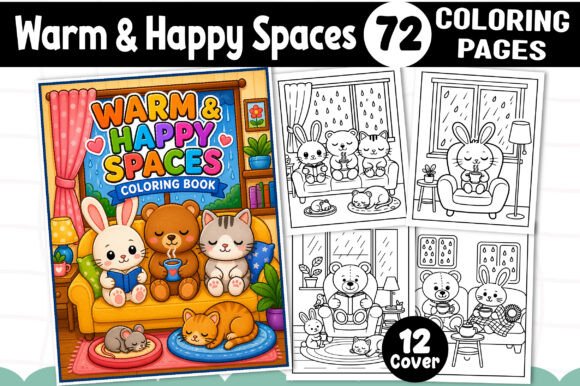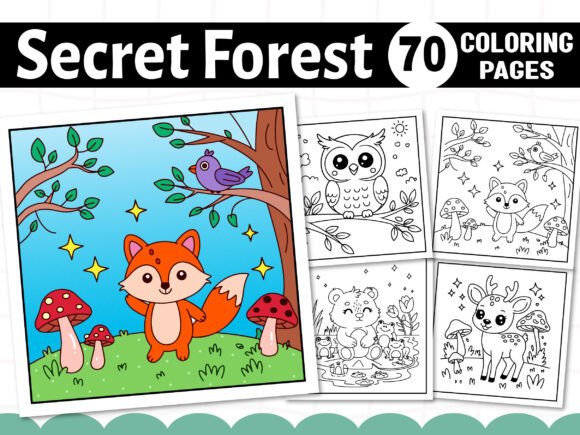
Secret Forest Coloring Pages for Kids
A Designer’s First Look: Whimsy with Quiet Intention
Opening the Secret Forest Coloring Pages for Kids zip file felt like lifting the flap of a storybook—soft, hushed, and full of possibility. These aren’t busy, high-contrast coloring sheets built for crayon chaos. Instead, they offer delicate line work, gentle organic shapes, and breathing room between elements: a fox peeking behind ferns, mushrooms with subtle gills, winding vines that taper without sharp angles. As an embroidery designer who’s stitched everything from toddler onesies to boutique aprons, I immediately saw how this mood translates—not as literal illustration, but as quiet, stitchable poetry.
Where This Design Lives Best in Real Embroidery Projects
I tested one page—a central woodland scene with layered trees and a hidden owl—as a machine embroidery design on a natural linen tote bag. The result? Calm, cohesive, and unmistakably handmade. The line weight held up beautifully in satin stitch borders and soft fill-stitch foliage. It didn’t shout; it invited. That’s rare—and valuable—for small shop owners crafting personalized gifts or Etsy sellers building a brand around mindful, nature-inspired products.
This works especially well for:
- Baby embroidery on organic cotton onesies or swaddle blankets—no harsh edges, no visual overload, just soothing rhythm.
- Embroidered patch applications on denim jackets or backpacks—the clean outlines make for crisp, stable applique designs.
- Sweatshirt embroidery where subtlety reads as luxury (think charcoal heather crewnecks with tonal thread).
- Nursery decor like pillow covers or framed hoop art—its gentle scale avoids overwhelming small spaces.
- Holiday embroidery for non-traditional gifting: think “first forest walk” tea towels for spring birthdays or “little explorer” kitchen linens.
Where to Proceed Thoughtfully
Don’t mistake delicacy for simplicity. The charm of Secret Forest Coloring Pages for Kids lies in its fine details—tiny leaves, narrow stems, spaced-out berry clusters. That means real-world embroidery constraints matter more here than with bolder graphics.
Use caution on:
- Small hoop sizes (under 4”): Some compositions spread wide. Crop thoughtfully—or choose single-element pages (like the lone hedgehog) for tight hoops.
- Textured fabrics like terry cloth or bouclé: Fine lines can blur. Add medium-weight cutaway stabilizer and reduce stitch density slightly.
- Stretchy fabric (knits, ribbed cuffs): Always test first. Even gentle curves in the design can distort if tension isn’t locked down.
- Dark fabric: These coloring pages assume light backgrounds. For navy or charcoal, verify contrast in your digital embroidery file preview—some thin branches may vanish without outline reinforcement.
- Curved surfaces like caps or mugs: Avoid pages with dense bottom-heavy arrangements. Opt instead for centered, vertically balanced scenes.
What It Adds—Beyond Just Stitching
As a craft business owner, I don’t just ask *“Will this stitch?”* I ask *“Will this make someone pause, smile, and reach for their wallet?”* Secret Forest Coloring Pages for Kids delivers on intangible value: it feels intentional, unhurried, and kind. That translates directly to customer trust—especially for buyers seeking meaningful handmade product over mass-produced alternatives.
It strengthens brand consistency for shops rooted in slow living, forest school ethos, or eco-conscious parenting. And because the line work is consistent across pages, you can build cohesive collections: matching embroidered sweatshirts and tea towels, or coordinating baby embroidery sets (onesie + burp cloth + blanket corner).
For digital product sellers, these are strong design assets—not just coloring pages, but adaptable foundations. Flip one into a monochrome stitch map for printable mockups. Trace a section for a minimalist running-stitch border. Use the spacing as a guide for balanced placement on custom apparel layouts.
Practical Notes Every Embroidery Designer Should Check
Before stitching your first Secret Forest Coloring Pages for Kids project, do these five things:
- Test on scrap fabric—same type and color as your final piece. Watch how thin lines behave after washing.
- Review thread colors against your base fabric in natural light. Soft greens and browns often need richer saturation to read clearly in stitch.
- Check stitch density in the foliage areas. Overly dense fill stitch can stiffen lightweight fabrics—consider open-fill or seed-stitch variants.
- Confirm hoop size compatibility before digitizing. If you’re working from raw line art (not pre-digitized files), allow 10–15% extra margin.
- Verify licensing—especially if selling finished items commercially. Since this is a Graphics product delivered as a .zip of coloring pages, clarify whether derivative embroidery files fall under personal or commercial use.
Final Thought: A Design That Grows With You
Secret Forest Coloring Pages for Kids isn’t flashy—but then, the most enduring embroidery projects rarely are. It’s the kind of design that gains warmth with each stitch, deepens in meaning with every handmade product it touches, and quietly earns repeat customers because it feels *true*. Whether you’re embroidering a holiday gift for a nature-loving niece or building a cohesive line for your small shop, this collection offers grounded, graceful material to work with—no hype needed, just honest, thoughtful design assets ready for real life.