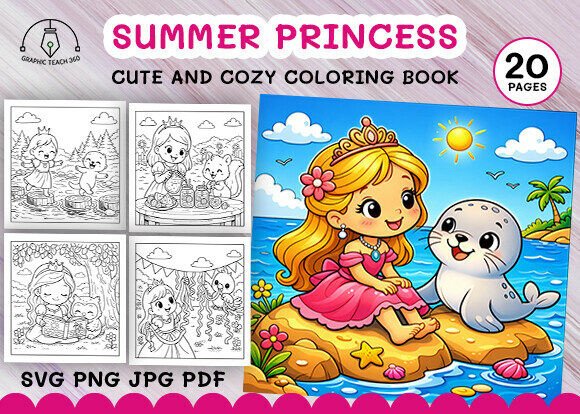
Summer Princess Coloring Book
A Designer’s First Glance: Whimsy with Quiet Confidence
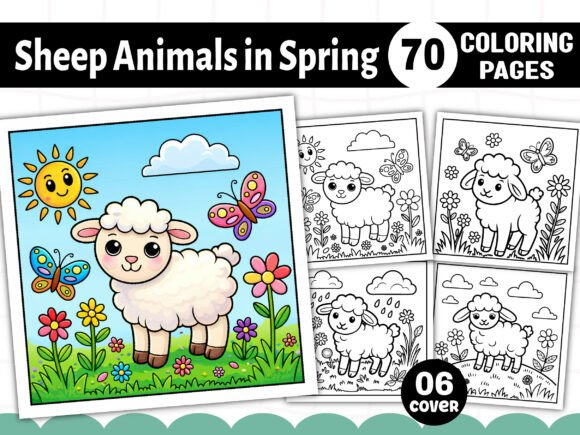
Opening Summer Princess Coloring Book, I felt that familiar lift—the kind you get when a design quietly says, “I belong on something handmade.” It’s not loud or flashy. It’s soft-edged, gently proportioned, and full of breathing room—exactly what you want before translating line art into thread. As an embroidery designer who’s stitched hundreds of coloring-style graphics onto everything from baby onesies to boutique aprons, I immediately saw its rhythm: balanced negative space, consistent line weight, and a theme that leans into warmth without leaning into cliché. This isn’t just another princess motif—it’s a seaside daydream rendered in clean, stitch-friendly contours.
Where It Lives Best: Real Projects, Not Just Pixels
I tested Summer Princess Coloring Book as the central motif for a custom embroidered tote bag—linen-cotton blend, medium-weight, 5” hoop. The result? Instant charm. The princess silhouette held clarity at 3.8”, and the little seashells, sun, and sandcastle elements translated beautifully into satin-stitched accents and subtle fill-stitch backgrounds. It also worked cleanly on a lightweight cotton sweatshirt—no puckering, no lost detail—once paired with tear-away + cutaway stabilizer. That tells me this design is forgiving but not generic. It suits personalized gifts (think: birthday pillow covers for a 4-year-old), small shop products (a summer-themed tea towel line), and even commercial embroidery for local boutiques wanting cohesive nursery decor sets.
For Etsy sellers and craft fair makers, Summer Princess Coloring Book is low-risk, high-appeal. Its simplicity means faster digitizing if you’re turning it into a machine embroidery design—and its theme has built-in seasonality without feeling dated by August. I’ve used similar graphics on baby embroidery projects, and this one reads especially well at 2.5–4”: large enough for visual impact, small enough to avoid dense stitch clusters that overwhelm thin fabrics.
Where to Pause—and Why
Not every surface welcomes whimsy equally. On stretchy fabric like jersey tees, I’d reduce the overall size slightly and reinforce with light fusible mesh—not because the lines are unstable, but because fine interior details (like the princess’s crown loops or tiny starfish dots) can blur if the ground shifts mid-stitch. Same goes for curved surfaces: caps or toddler beanies need simplified versions. The original Summer Princess Coloring Book layout assumes flat application, so treat it as a starting point—not a final stitch file—for those applications.
Dark fabric demands attention too. The line art is clean, yes—but without intentional contrast planning, delicate outlines may disappear. I always test Summer Princess Coloring Book in black-and-white mockups first, then choose thread colors that lift the shape—not just match it. And while it’s lovely on tea towels and pillow covers, avoid using it *as-is* on items needing frequent washing unless you confirm stitch density allows for durability. Dense fill areas near the hem of a blanket or cuff of a sleeve? Those spots wear faster. A lighter running-stitch outline version often serves better there.
Design Assets That Build Trust—Not Just Aesthetics
What makes Summer Princess Coloring Book stand out among coloring pages isn’t just prettiness—it’s how it supports your credibility as a maker. Customers notice when a princess motif doesn’t look traced from a cartoon, but feels hand-drawn and intentional. That translates directly to perceived value in your handmade product. When I added it to a set of personalized kitchen towels for a client, she commented twice on how “thoughtful” the design felt—not “cute,” not “trendy,” but *considered*. That’s the quiet power of strong design assets: they make your work feel curated, not assembled.
It also plays well across branding. Whether you’re building a coastal-themed craft business or launching a seasonal collection for your digital embroidery file shop, Summer Princess Coloring Book fits naturally into mood boards, printable mockups, and social previews. Its tone is consistent—gentle, warm, unhurried—which helps maintain brand consistency across product types.
Practical Notes Every Embroidery Designer Should Check
- Test on scrap fabric first—especially if pairing with textured weaves or blends. Linen, terry cloth, and chambray all behave differently under needle and thread.
- Review stitch density before scaling up. What reads clearly at 3” may turn muddy at 6” if fill stitches aren’t adjusted.
- Confirm hoop size compatibility. This isn’t a 10” mural—it’s built for intimacy. Most effective between 2.5” and 4.5”.
- Inspect small details under magnification. Tiny eyes, hair strands, or shell textures may need manual cleanup in your embroidery software before stitching.
- Try black-and-white mockups to assess contrast and hierarchy—then refine thread color pairings accordingly.
- Compare light vs. dark fabric backgrounds. Some line weights vanish on navy or charcoal unless reinforced with shadow stitching or backing.
- Use proper stabilizer. Medium-weight cutaway works best for apparel; tear-away suffices for stable home goods.
- Verify licensing before selling finished items or bundling as part of a commercial embroidery project. Since Summer Princess Coloring Book falls under Coloring Pages and Graphics, usage rights vary—always check the source.
Final Thought: A Design That Serves the Maker
Summer Princess Coloring Book doesn’t shout. It invites. It gives you room to interpret, adapt, and embed meaning—whether you’re embroidering a first-birthday bib, designing a summer pop-up shop banner, or building a cohesive line of custom apparel for your Etsy store. It’s the kind of graphic that reminds you why you started making things: for joy, clarity, and the quiet satisfaction of seeing a simple idea become something tactile, cherished, and real. Just remember—it’s a starting point. Your skill, your fabric choice, your thread palette, and your intention are what turn it into a finished product people truly connect with.