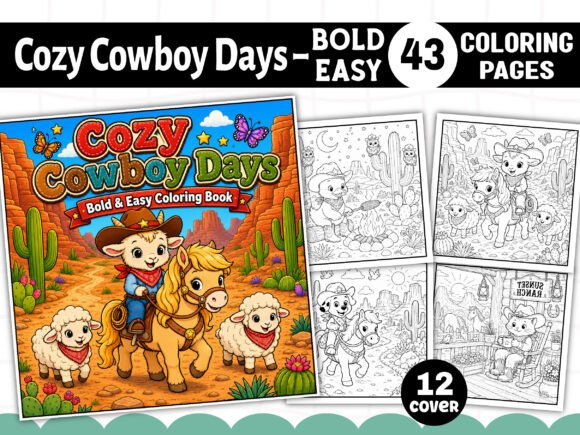
Bold Easy Cozy Cowboy Days Coloring Book
First Impressions: Warm, Whimsical, and Ready for Stitching
Opening the Bold Easy Cozy Cowboy Days Coloring Book zip file felt like flipping through a sun-bleached notebook left on a porch swing—soft edges, friendly lines, and that unmistakable “cozy Americana” charm. As an embroidery designer who’s stitched everything from intricate monograms to festival patches, I immediately scanned for what matters most in real-world use: clean line weight, intentional negative space, and rhythm in the composition. This isn’t fussy Western decor—it’s approachable, gently stylized cowboy life: boots, cacti, lassos, smiling suns, and hand-lettered phrases like “Yeehaw & Cozy.” The bold outlines hold up well at small scale, and the easy flow of shapes suggests it’ll translate cleanly into stitch without excessive digitizing cleanup.
A Real Project Test: Embroidering a Linen Tote for a Boutique Pop-Up
Last week, I prepped a limited-run embroidered tote for a local craft fair—linen blend fabric, medium-weight tear-away stabilizer, and a 4" x 4" hoop. I chose one of the simpler pages from the Bold Easy Cozy Cowboy Days Coloring Book: a centered cactus with “Howdy” arched above it. The design held its personality beautifully after stitching—no lost details, no thread nesting in corners. Customers responded instantly: “That’s so me,” said one woman holding her new bag; another asked if I’d do it on a baby onesie. That’s the quiet strength of this collection—not just visual appeal, but emotional resonance that converts to sales. It works because it feels handmade *before* you even stitch it.
Where It Shines (and Where to Pause)
- Custom apparel: Sweatshirt embroidery? Yes—especially on midweight cotton or fleece where the bold lines read clearly even at 3.5". T-shirt designs benefit from its generous spacing between elements; no risk of stitches bleeding together.
- Personalized gifts: Baby embroidery on burp cloths or bibs works well when scaled to 2.75"–3". The simplified motifs avoid tiny limbs or fragile details that fray with washing.
- Embroidered patch potential: Several pages have self-contained borders and strong silhouettes—ideal for iron-on or sew-on patches on denim jackets or backpacks.
- Holiday & boutique merchandise: Pair “Cozy Cowboy Days” with plaid tea towels or rustic pillow covers—it reads as warm, seasonal, and authentically crafted, not mass-produced.
- Etsy listings & digital mockups: The high-resolution coloring page format makes it easy to build clean printable mockups. Show it on a cream sweatshirt or oatmeal linen tote—it sells the lifestyle, not just the stitch.
Use With Intention—Not Assumption
This isn’t a one-size-fits-all embroidery file. It’s a coloring book page—so before converting it to a machine embroidery design or applique design, consider these real constraints:
- Small hoop sizes (under 3"): Some scenes include grouped elements (e.g., cowboy + horse + cactus). Scale down carefully—you’ll lose legibility in fine linework or lettering.
- Textured or stretchy fabric: Satin stitch areas may ripple on terry cloth or ribbed knit unless stabilized heavily. Running stitch outlines hold up better on curved surfaces like caps.
- Dark fabric backgrounds: The bold lines help, but test thread colors first—cream or tan thread can disappear on charcoal. A light gray or oatmeal thread often reads warmer and clearer than stark white.
- Frequent-wash items (baby clothes, kitchen towels): Avoid dense fill stitch sections unless you’re confident in your stabilizer + thread combo. Simpler outlines = longer-lasting finished product.
What It Adds to Your Craft Business—Beyond the Stitch
As a designer who also advises Etsy sellers and small shop owners, I notice how much Bold Easy Cozy Cowboy Days Coloring Book quietly lifts perceived value. Its warmth builds trust—customers feel like they’re buying something thoughtful, not algorithm-generated. When used on a personalized gift (“Emma’s First Rodeo” on a quilt square), it signals care. On a boutique apron? It reinforces brand consistency—friendly, grounded, handmade. And for digital product sellers: pairing one of these pages with a simple SVG version or stitch guide creates a layered, premium offering. It doesn’t scream “trend”—it hums with steady, sellable character.
Practical Designer Notes Before You Stitch
- Test the design on scrap fabric *first*—especially if using textured or dark material.
- Check thread color contrast in natural light *and* under store lighting (many craft fairs are fluorescent).
- Review stitch density if digitizing yourself—coloring book lines often need slight thickening for stability in fill or satin stitch.
- Confirm hoop size compatibility early—don’t assume all pages fit standard 4" x 4" hoops without scaling.
- Inspect small details: tiny stars, rope loops, or script lettering may need manual cleanup for clean embroidery execution.
- Try a black-and-white mockup—it reveals balance and clarity faster than color.
- Compare how the design reads on light vs. dark fabric backgrounds before finalizing your product lineup.
- Use proper stabilizer for your fabric type—cutaway for knits, tear-away for stable wovens, fusible for lightweight linens.
- Verify licensing terms before selling finished embroidered items or bundling the coloring pages as part of a commercial embroidery kit.
Final Thought: A Design That Feels Like a Conversation Starter
The Bold Easy Cozy Cowboy Days Coloring Book doesn’t try to be everything. It’s not hyper-detailed, not minimalist, not ironic. It’s warm, clear, and quietly confident—like a well-worn leather belt or a favorite bandana. That’s why it works so well across tote bags, baby items, holiday gifts, and small shop merchandise. It gives your handmade product a voice before anyone reads the tag. For embroidery designers, craft business owners, and Etsy sellers building a recognizable aesthetic, it’s less of a “design asset” and more of a reliable collaborator—one that helps you say something genuine, with thread.