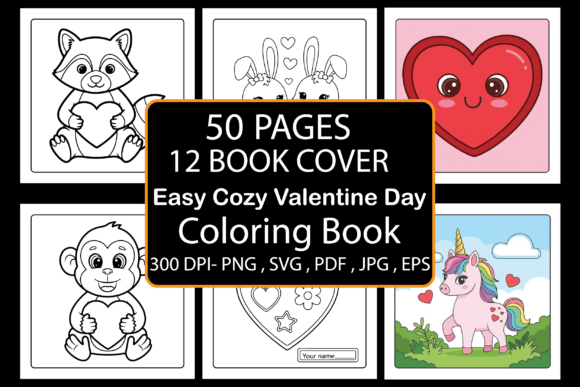
Cozy Merry Christmas Coloring Book
As a designer who’s stitched holiday motifs on everything from organic cotton baby onesies to heavyweight denim tote bags, I opened the Cozy Merry Christmas Coloring Book expecting charm—and found something more useful: quiet intentionality. This isn’t just another batch of festive line art. It’s a curated set of 50 coloring pages built around warmth, simplicity, and gentle detail—exactly the kind of visual language that translates well into thoughtful embroidery work.
First Impressions: Softness with Structure
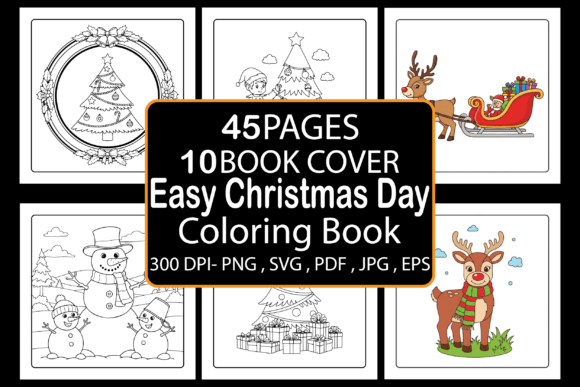
The mood is instantly legible: nostalgic but not dated, cheerful but not loud. Think knitted mittens beside steaming mugs, snow-dusted pine boughs with subtle berries, and softly rounded lettering that says “Merry Christmas” without shouting. There’s no aggressive outlining or over-rendered shading—just confident, open-line drawings with breathing room. That openness is gold for embroidery designers. It means fewer dense fill-stitch zones, less risk of thread buildup on delicate fabrics, and more flexibility when adapting shapes for satin-stitched borders or running-stitch outlines.
I immediately pictured one of the quieter designs—a wreath with a single bow and minimal foliage—as a centered motif on a linen tea towel. Not too busy, not too sparse. Just enough personality to feel handmade, not so much that it overwhelms the fabric’s natural texture.
Where It Shines in Real Embroidery Projects
The Cozy Merry Christmas Coloring Book excels where subtlety matters most: baby embroidery, boutique apparel, and personalized gifts. On a lightweight cotton onesie, a simplified tree design (scaled down from the collection) stitched in matte pastel thread reads as tender—not technical. On a brushed-cotton sweatshirt, the same motif gains cozy weight without needing heavy stitch density.
Etsy sellers and small shop owners will appreciate how these illustrations lend themselves to layered storytelling. Pair one of the mug-and-cookie scenes with custom monogramming on a kitchen apron, or use a tiny bell motif as a corner accent on a pillow cover. Because the lines are clean and moderately spaced, they hold up beautifully in both satin-stitch appliqué and minimalist running-stitch interpretations.
For commercial embroidery projects—like holiday-themed merchandise for a local café or boutique—the Cozy Merry Christmas Coloring Book offers consistent tone across all 50 designs. That cohesion builds brand trust. Customers recognize the style across tote bags, patches, and even embroidered book covers for KDP interiors. It feels intentional, not algorithmically generated.
Where to Proceed Thoughtfully
This isn’t a plug-and-play file for every surface. The charm lies in its soft edges—and those edges demand attention on challenging substrates. On stretchy fabrics like jersey or ribbed knit, tighter curves (like the loop of a candy cane or the curl of a ribbon) may distort if stabilizer isn’t carefully matched to fabric weight and drape. Likewise, dark fabrics require testing: some of the finer interior lines—meant for coloring—may disappear unless translated into slightly heavier running stitches or outlined in contrasting thread.
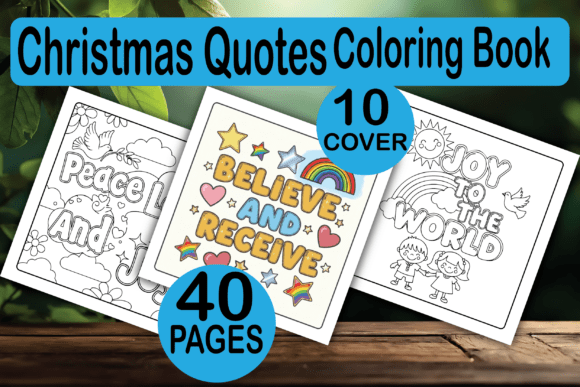
Small hoop sizes (under 4” diameter) also call for selective editing. A full nativity scene from the collection is lovely on paper—but for a cap front or pocket patch, you’ll want to isolate one figure or simplify key elements. Tiny lettering in phrases like “Joy to the World” should be reviewed for legibility at 2–3 inches wide; what reads clearly in print may blur in satin stitch without slight bolding or spacing adjustment.
And while the designs avoid extreme intricacy, don’t assume low stitch count. Some snowflake variations include delicate branching—lovely on stable woven fabrics, but potentially fragile on high-wash items like kids’ towels unless reinforced with proper underlay and stabilizer choice.
Practical Notes Every Embroidery Designer Should Keep Handy
- Always test first—on scrap fabric matching your final product’s weight, weave, and stretch.
- Check thread color contrast early. These coloring pages rely on line clarity—so if your thread blends into the background, the design vanishes.
- Review stitch density before digitizing. Open-line art can tempt low-density fills, but too little coverage shows fabric peeking through—especially on light-colored garments.
- Confirm hoop size compatibility with your machine and project type. A 6x10” design won’t fit neatly on a curved cap front without strategic cropping or repositioning.
- Inspect small details at actual stitch scale—not just on screen. What looks crisp at 200% zoom may need reinforcement at 1:1.
- Test black-and-white mockups to assess value contrast. If it reads well in grayscale, it’ll translate cleanly across fabric colors and thread palettes.
- Use appropriate stabilizer: cutaway for knits, tear-away for stable wovens, and mesh for lightweight silks or voiles.
- Verify licensing before selling finished embroidered products or reselling digital files. Since this is marketed for KDP, POD, and Etsy, confirm whether commercial use includes derivative embroidery files—or only printed coloring pages.
Beyond the Stitch: Why It Builds Trust
Customers don’t buy “coloring pages.” They buy the feeling behind them—and the Cozy Merry Christmas Coloring Book delivers that quietly. When stitched onto a handmade pillow cover or baby blanket, it signals care, not convenience. That perception lifts perceived value. A customer paying $48 for an embroidered linen towel isn’t just buying fabric—they’re buying the warmth of the season, rendered thoughtfully.
For craft businesses, that emotional resonance strengthens repeat engagement. Buyers remember how a gift *felt*, not just how it looked. And because these designs avoid trend-chasing clichés (no glitter bombs or hyper-realistic reindeer), they age gracefully—making them smart inventory for holiday collections year after year.
In short: the Cozy Merry Christmas Coloring Book isn’t flashy—but it’s reliable, adaptable, and deeply human. It respects the craft behind embroidery, the care behind gifting, and the quiet confidence of makers who choose quality over clutter. Use it well, test it thoroughly, and let its coziness speak for itself.