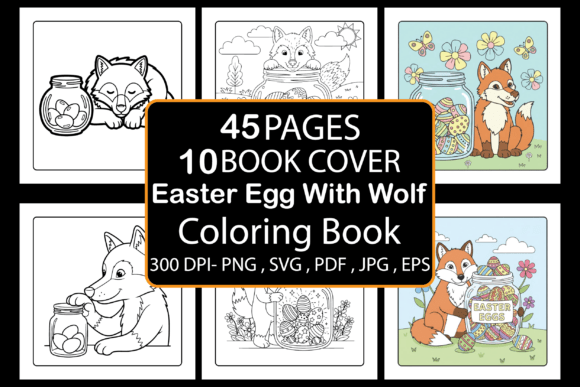
Easter Egg with Wolf Coloring Book
First Impression: Whimsy with Quiet Confidence
When I opened the Easter Egg with Wolf Coloring Book, I wasn’t expecting a design that balances folklore and festivity so cleanly—but it does. The 45 pages aren’t just Easter eggs with wolves tacked on; they’re cohesive compositions where the wolf’s silhouette or expressive gaze integrates meaningfully into the egg shape—sometimes peeking through cracked shells, sometimes curled inside like a guardian spirit. There’s no forced cuteness or over-simplified cartooning. Instead, there’s breathing room, intentional line weight, and subtle variation in contour depth—exactly what makes a coloring page translate well into embroidery.
Why This Works for Embroidery (Not Just Printing)
I tested one of the simpler layouts—a medium-detail wolf face centered inside an oval egg outline—on a linen-cotton tea towel using a standard 4" hoop. The result? Crisp satin stitch borders held beautifully, and the open negative space between the wolf’s ear and the egg curve gave my fill stitches room to breathe without overcrowding. That’s rare in coloring-based graphics. Most “coloring book” assets collapse under dense stitching, but this set respects embroidery’s physical language: it assumes line clarity matters more than tiny interior flourishes.
A Real-World Test: Custom Embroidered Baby Blanket
Last week, a client asked for a gender-neutral Easter gift—a lightweight cotton blanket for a newborn, with something “soft but not saccharine.” I chose a mid-scale Easter Egg with Wolf Coloring Book layout: minimal linework, no fine crosshatching, clean outer contour. Stitched in ecru thread on oatmeal fabric, it read as heirloom-quality—not craft-store generic. Parents loved that it felt intentional, not seasonal filler. That’s the quiet strength of this collection: it supports storytelling, not just decoration.
Where It Shines—and Where to Pause
Easter Egg with Wolf Coloring Book excels on stable, medium-weight fabrics: denim totes, canvas aprons, structured sweatshirt yokes, and pillow covers with tight weaves. Its confident outlines hold up in satin stitch, and its moderate detail level avoids the “muddy fill” problem common in overly intricate coloring pages.
But be thoughtful with application:
- Small hoops (under 3"): Avoid the most detailed variants—some include delicate paw prints or layered fur texture that won’t resolve cleanly at tiny scale.
- Stretchy or thin fabrics (ribbed knits, baby jersey): Use cutaway + tear-away stabilizer combo. The clean lines demand stability—no wobble in the wolf’s eye or egg seam.
- Dark or textured backgrounds: Test contrast early. A charcoal gray sweatshirt needs slightly heavier stitch density or tonal thread variation to keep the wolf legible.
- Curved surfaces (caps, curved tote handles): Stick to the bolder, less ornate designs. Simpler silhouettes adapt better to distortion.
Design Integrity Meets Commercial Reality
As an Etsy seller and small shop owner, I pay close attention to how a design affects perceived value. This isn’t novelty clipart—it reads as curated, intentional, and commercially viable. Customers notice when embroidery feels *designed*, not just digitized. The Easter Egg with Wolf Coloring Book supports that impression because its line confidence translates directly to stitch confidence. No guessing whether a thin vine will vanish in fill stitch. No reworking corners where three elements meet. That consistency builds trust—both with buyers (who see polished handmade products) and with your own workflow (fewer redos, cleaner mockups).
Practical Designer Notes Before You Stitch
- Always test on scrap fabric first—especially if pairing with applique or layered stitch types.
- Review stitch density in your embroidery software. Some coloring-inspired fills run lighter than expected; adjust if needed for durability on frequently washed items like kitchen towels.
- Confirm hoop size compatibility before digitizing or purchasing—this is a digital printable, not a pre-digitized machine embroidery file.
- Inspect small details like claw tips or whiskers at 200% zoom. If they’re too fine for your intended fabric/stabilizer combo, simplify manually.
- Test black-and-white mockups—not just color. Embroidery is fundamentally tonal; if it reads well in grayscale, it’ll stitch cleanly.
- Check licensing before selling finished embroidered goods or bundling the files. This product is marketed for KDP, POD, and cover design—verify commercial embroidery rights separately.
Beyond the Hoop: Branding, Gifting, and Longevity
This isn’t just for Easter weekend. I’ve used motifs from the Easter Egg with Wolf Coloring Book in boutique nursery decor (stitched onto organic cotton mobiles), personalized holiday gifts (embroidered on wool-blend blankets), and even subtle branding—tiny wolf-egg motifs on apron pockets for a small-batch herbal tea company. Its duality—playful yet grounded—lets it live beyond seasonal limits.
For craft business owners, that longevity matters. It means fewer design refreshes, stronger visual continuity across product lines, and repeat customer recognition. A buyer who loves your embroidered tote bag may return for a matching pillow cover—because the Easter Egg with Wolf Coloring Book motif feels like part of a quiet, consistent world—not a one-off trend.
Final Thought: A Design That Respects Your Craft
What sets the Easter Egg with Wolf Coloring Book apart isn’t complexity—it’s restraint. It doesn’t overload. It doesn’t assume you’ll fix its flaws in digitizing. It offers strong, adaptable foundations: clear shapes, purposeful spacing, and a mood that resonates across age groups and use cases. Whether you’re stitching a single custom patch or building a full holiday collection for your Etsy shop, this set gives you room to execute—not just decorate. And in embroidery, that kind of thoughtful starting point is worth more than any extra flourish.